By sharing knowledge, experience and views in the field of forging technology, we help you understand, learn and apply relevant technologies.

Hulk Metal Forging Technology
Share technical experience
-
Home>
-
Blog>
-
Technology>
Open Die Forging vs. Closed Die Forging: A Comprehensive Comparison of Forging Processes
05
2026.03

Forging is one of the most important metal forming processes used in modern manufacturing. By applying compressive forces to heated metal, forging significantly improves the internal grain structure, mechanical strength, and durability of components. Because of these advantages, forged parts are widely used in industries such as construction, automotive, energy, mining, and heavy machinery.
Among the various forging methods, Open Die Forging and Closed Die Forging are two of the most commonly used techniques in industrial production. Although both processes rely on plastic deformation of heated metal, their tooling systems, production processes, costs, and application scenarios differ significantly.
Understanding the differences between these two forging processes is essential for manufacturers, engineers, and procurement professionals who want to select the most suitable manufacturing method for their projects. This article provides a detailed comparison of Open Die Forging and Closed Die Forging, focusing on their production processes, advantages, limitations, and typical applications.
What Is Open Die Forging?
Definition of Open Die Forging
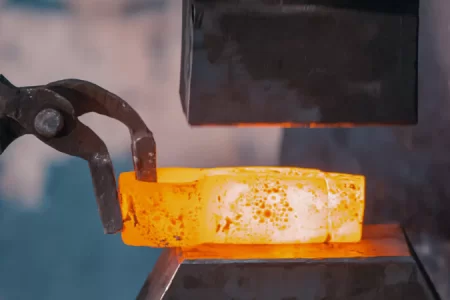
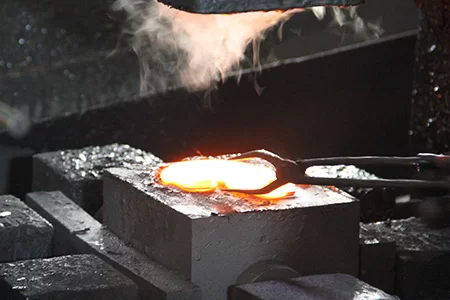
Open die forging, sometimes referred to as free forging, is a metal forming process in which heated metal is compressed between flat or simple-shaped dies that do not fully enclose the material. The metal is gradually shaped through repeated hammering or pressing operations.
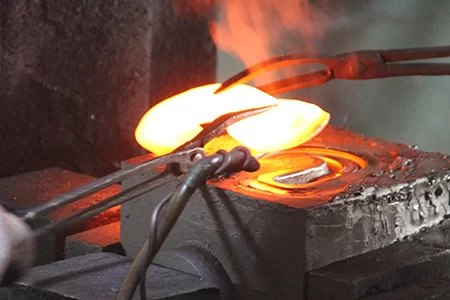
Because the dies are not closed around the workpiece, the metal can flow freely in multiple directions during deformation. Operators or automated systems continuously reposition the workpiece between forging strokes until the desired shape is achieved.
This process is particularly suitable for producing large and simple-shaped components, such as shafts, rings, cylinders, and blocks.
Open Die Forging Production Process
The open die forging process typically includes several key stages:
Raw Material Preparation
The process usually starts with steel ingots or billets. These materials are selected based on the mechanical properties required for the final component.
Heating the Metal
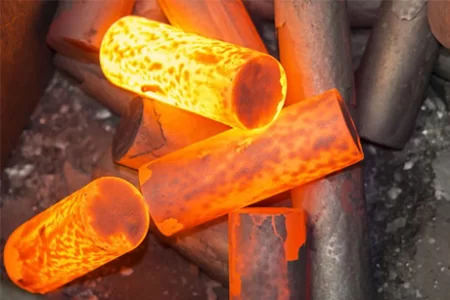
The workpiece is heated in a forging furnace until it reaches the appropriate forging temperature. For most carbon steels and alloy steels, this temperature typically ranges between 900°C and 1200°C. Heating increases the metal’s ductility and reduces deformation resistance.
Primary Forging Operation
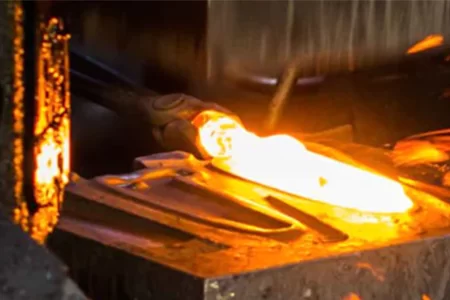
The heated metal is transferred to forging equipment such as a hydraulic press or forging hammer. Compressive forces are applied repeatedly to shape the material.
Intermediate Reheating
For large components, the workpiece may need to be reheated during the process to maintain optimal forging temperatures.
Shaping and Sizing
Through a series of forging operations—such as drawing out, upsetting, and flattening—the workpiece gradually approaches its final dimensions.
Cooling and Post Processing
After forging, the part is cooled and may undergo additional operations such as heat treatment, machining, and surface finishing.
Typical Equipment Used in Open Die Forging
Open die forging requires specialized heavy-duty equipment, including:
Hydraulic forging presses
Forging hammers
Manipulators or forging robots
Heating furnaces
Handling equipment for large workpieces
These machines allow manufacturers to process extremely large components that cannot be produced using other forming methods.
Advantages of Open Die Forging
Open die forging offers several key benefits:
Capability to Produce Large Parts
One of the most significant advantages is the ability to manufacture extremely large components, sometimes weighing several tons.
Improved Internal Structure
The forging process refines the grain structure of the metal, improving strength, fatigue resistance, and overall mechanical performance.
Lower Tooling Cost
Because the dies are simple and reusable, tooling costs are relatively low compared with closed die forging.
Flexible Production
Open die forging is suitable for small production runs and customized components.
Limitations of Open Die Forging
Despite its advantages, open die forging also has some limitations:
Lower dimensional accuracy
Rougher surface finish
More extensive machining required
Slower production speed for complex shapes
What Is Closed Die Forging?
Definition of Closed Die Forging
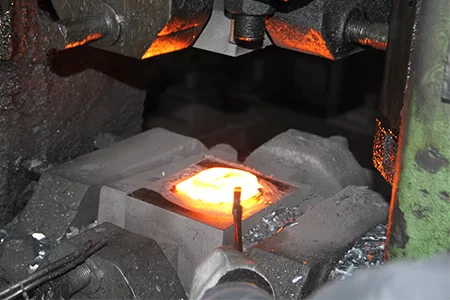
Closed die forging, also known as impression die forging, is a process in which heated metal is placed into a set of dies that contain a pre-designed cavity. When compressive force is applied, the metal flows and completely fills the cavity, forming a component that closely matches the final shape.
Unlike open die forging, the dies fully control the metal flow, enabling the production of complex geometries with high dimensional accuracy.
Closed Die Forging Production Process
The closed die forging process typically includes the following steps:
Material Preparation
Metal billets or bars are cut into appropriate sizes based on the volume required to fill the die cavity.
Heating the Workpiece
The billets are heated to the appropriate forging temperature in a furnace to improve plasticity.
Die Preparation
The forging dies are preheated to reduce thermal shock and extend die life.
Forging Operation
The heated billet is placed between the upper and lower dies. A forging press or hammer applies high pressure, forcing the metal to fill the die cavity.
Flash Formation and Removal
During forging, excess metal flows out of the cavity and forms flash around the edges. This flash is later removed through trimming.
Heat Treatment and Finishing
The forged parts may undergo heat treatment, shot blasting, machining, or surface finishing depending on product requirements.
Typical Equipment Used in Closed Die Forging
Closed die forging operations commonly use the following equipment:
Mechanical forging presses
Screw presses
Drop hammers
Precision forging machines
Custom-designed forging dies
These systems allow manufacturers to produce parts with high repeatability and precision.
Advantages of Closed Die Forging
Closed die forging offers several important benefits:
High Dimensional Accuracy
The use of precision dies allows parts to be produced with tight tolerances.
Excellent Surface Quality
Compared with open die forging, the surface finish is significantly better.
Higher Material Utilization
Because the die controls the metal flow, material waste is reduced.
High Production Efficiency
Closed die forging is ideal for large production volumes and automated manufacturing.
Limitations of Closed Die Forging
However, closed die forging also presents some challenges:
High die design and manufacturing costs
Limited size range for extremely large components
Higher initial investment in equipment and tooling
Less flexibility for small production runs
Production Process Comparison: Open Die vs. Closed Die Forging
Although both forging methods involve heating metal and applying compressive force, their production workflows differ considerably.
Forging Process Workflow
Open die forging uses repeated deformation with simple dies, allowing the metal to flow freely and gradually form the desired shape. In contrast, closed die forging relies on a precisely designed cavity that forces the metal into a predetermined geometry.
Equipment and Tooling Requirements
Open die forging requires large forging presses and simple tooling. Closed die forging, on the other hand, requires precision dies that must be carefully designed and manufactured for each part.
Material Utilization
Material utilization is typically higher in closed die forging. While some flash is generated, the overall metal flow is well controlled. Open die forging usually requires more machining, which can increase material waste.
Production Efficiency
Closed die forging is more efficient for high-volume production because parts can be produced quickly once the dies are prepared. Open die forging is generally slower and more suitable for custom or low-volume components.
Dimensional Accuracy and Surface Finish
Closed die forging provides significantly better dimensional accuracy and surface quality. Open die forging parts often require extensive machining to achieve final specifications.
Key Differences Between Open Die and Closed Die Forging
| Aspect | Open Die Forging | Closed Die Forging |
|---|---|---|
| Die Structure | Simple flat or shaped dies | Precision cavity dies |
| Metal Flow | Free metal flow | Controlled metal flow |
| Part Size | Suitable for very large components | Suitable for small to medium components |
| Dimensional Accuracy | Lower | Higher |
| Surface Finish | Rougher | Smoother |
| Tooling Cost | Low | High |
| Production Volume | Low to medium | Medium to high |
| Typical Industries | Heavy machinery, energy | Automotive, machinery, construction |
Application Scenarios
Applications of Open Die Forging
Open die forging is widely used in industries that require large and high-strength components, including:
Wind power shafts
Large forged rings
Pressure vessel components
Heavy machinery shafts
Oil and gas equipment
These components often require superior mechanical strength and structural integrity.
Applications of Closed Die Forging
Closed die forging is commonly used for smaller, complex, and high-volume components, such as:
Automotive crankshafts and connecting rods
Construction machinery parts
Industrial tools
Fasteners and hardware
Agricultural equipment components
Because of its precision and efficiency, closed die forging is ideal for large-scale production.
How to Choose Between Open Die Forging and Closed Die Forging
Selecting the appropriate forging method depends on several important factors.
Part Size
Large components typically require open die forging, while smaller components are better suited to closed die forging.
Production Volume
For high-volume production, closed die forging offers better efficiency and lower unit cost.
Budget and Tooling Cost
Open die forging has lower initial tooling costs, making it more suitable for custom parts or small production runs.
Precision Requirements
If tight tolerances and smooth surfaces are required, closed die forging is generally the better option.
Post-Processing Requirements
Open die forged parts usually require more machining to reach final specifications.
By evaluating these factors, manufacturers can select the forging process that provides the best balance between cost, performance, and efficiency.
Both Open Die Forging and Closed Die Forging play essential roles in modern metal manufacturing. Open die forging is ideal for producing large, heavy components with excellent internal strength and structural integrity. Closed die forging, on the other hand, provides higher precision, better surface quality, and greater efficiency for high-volume production.
Choosing the right forging process is critical for achieving the desired product performance while optimizing manufacturing costs.
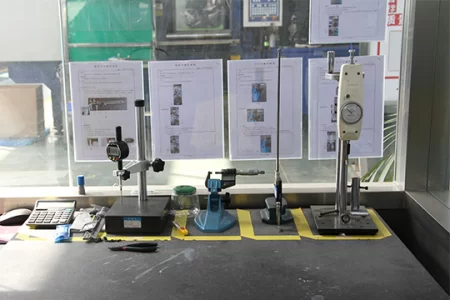
With extensive experience in metal forging and manufacturing, HULK Metal provides professional forging solutions tailored to different industrial applications. From material selection and forging process optimization to machining and quality inspection, our team ensures that every forged component meets strict performance and reliability standards.
If you are looking for a reliable partner for custom forged metal parts, HULK Metal offers comprehensive forging services and a complete supply chain to help you achieve high-quality products and efficient production. Contact our team to learn more about our forging capabilities and customized manufacturing solutions.
Article Navigation
Others You Might Want to Know
Article Navigation
Industries
Foundries
Others Articles About Hot Forging
-

July.01, 2024
Difference between hot forging and cold forging
READ MORE
-
June.27, 2024
What are the advantages and disadvantages of the hot forging process?
READ MORE
-
January.18, 2024
Forging: What Is It? What Are The Different Types of Hot Forging?
READ MORE
-
March.07, 2025
What to look for when looking for a Forging Manufacturer?
READ MORE
-
February.28, 2025
Open Die Forging: Exploring the forging process and the key factors in selecting a OEM
READ MORE
-
February.18, 2025
Factors to consider when purchasing custom forgings
READ MORE
-
February.14, 2025
HULK Metal's hot forging quality control
READ MORE