By sharing knowledge, experience and views in the field of forging technology, we help you understand, learn and apply relevant technologies.

Hulk Metal Forging Technology
Share technical experience
-
Home>
-
Blog>
-
Technology>
What Truly Affects Custom Forged Parts Cost?
27
2026.02

In modern manufacturing industries such as automotive, construction equipment, mining, agriculture, railway systems, and energy infrastructure, custom forged parts are essential components. These parts are often responsible for transmitting loads, absorbing impact, and ensuring structural integrity under demanding working conditions.
For purchasing managers and engineers, understanding what determines the cost of custom forged parts is critical. Many buyers focus only on unit price. However, the real cost of a forged component is influenced by multiple technical, operational, and strategic factors.
A professional OEM forging partner evaluates the complete production chain to optimize both performance and cost. Below is a comprehensive analysis of the key factors that determine the final pricing of custom forged parts.
Raw Material Selection and Pricing
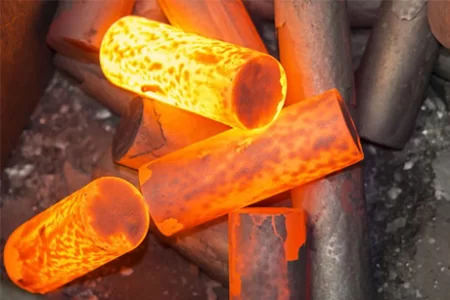
Raw material typically accounts for 50–70% of the total cost of a forged part. Therefore, material selection is the most significant cost driver.
Material Type
Common forging materials include:
Carbon steel
Alloy steel
Stainless steel
Aluminum
Special engineering alloys
Higher alloy content generally increases material cost. For example, adding elements such as chromium, nickel, or molybdenum significantly improves corrosion resistance and strength but also raises raw material expenses.
Grade Optimization
Over-specification is a common hidden cost. Selecting a higher-grade steel than required increases both material and heat treatment expenses.
At HULK Metal, our engineering team reviews load conditions, fatigue requirements, and service environments to recommend the most suitable grade—ensuring safety without unnecessary cost.
Market Volatility
Steel prices fluctuate due to global supply and demand. Suppliers with long-term partnerships and bulk procurement agreements can stabilize pricing and reduce the impact of sudden market increases.
Material Utilization
Near-net shape forging improves material yield and reduces machining waste. Even a small improvement in material utilization can create significant savings in high-volume projects.
Part Design and Engineering Complexity
The geometry and structure of a forged component directly affect manufacturing cost.
Size and Weight
Heavier parts require larger billets, higher press tonnage, and more energy for heating. Larger dimensions also increase machining time.
Geometric Complexity
Complex shapes require more advanced die design and tighter process control. Intricate contours and deep cavities increase tooling cost and processing time.
Tolerances
Tighter dimensional tolerances often require additional machining operations and stricter inspection procedures.
Design for Manufacturability (DFM)
When manufacturers are involved early in the design phase, they can suggest modifications that reduce machining allowance and simplify forging processes—lowering total cost.
Tooling and Die Development
Custom forging requires dedicated tooling.
Die Material and Manufacturing
High-quality die steel improves tool life but increases initial tooling cost.
Tooling Amortization
For large production volumes, tooling cost is distributed across many parts, reducing per-unit cost. For small batches, tooling cost significantly impacts pricing.
Prototype vs Mass Production
Prototype tooling may be simpler and less expensive, but mass production requires durable, precision dies for consistent output.
HULK Metal’s in-house mold design team optimizes die life to reduce long-term tooling expenses.
Forging Process Selection
Different forging processes have varying cost structures.
Open Die Forging
Suitable for large components and small batches. Tooling cost is lower, but machining requirement is higher.
Closed Die Forging
Higher initial tooling cost but better dimensional accuracy and lower material waste.
Hot vs Cold Forging
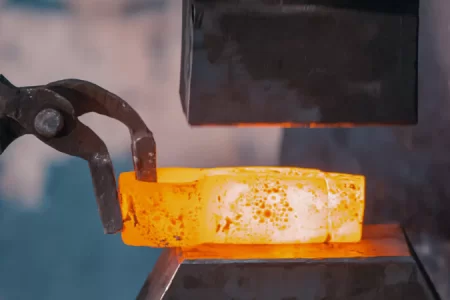
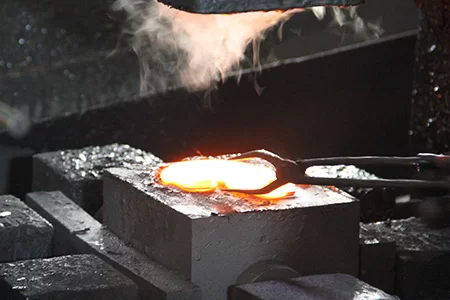
Hot forging allows complex shapes and refined grain structure. Cold forging provides better surface finish but requires higher material ductility.
Choosing the correct process directly influences total cost efficiency.
Production Efficiency and Equipment Capacity
Equipment capability determines both quality and cost.
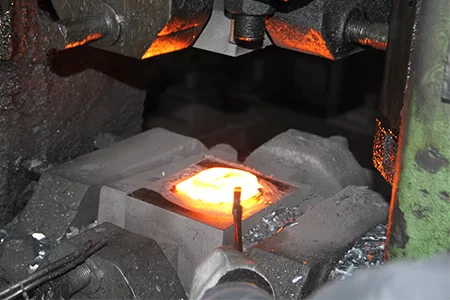
HULK Metal operates forging presses ranging from 200 tons to 1000 tons, enabling production from small to medium-sized components.
Automation
Automated production lines reduce labor cost and minimize defects.
Skilled Workforce
Experienced operators ensure stable production and lower scrap rates.
Capacity Utilization
Efficient production planning spreads fixed costs across higher output volumes.
Heat Treatment and Secondary Operations
Forged parts often require additional processing.
Heat Treatment
Processes such as quenching, tempering, and normalizing improve mechanical properties but add energy cost.
Machining
Precision machining ensures final dimensions. Complex machining increases cycle time and tool wear.
Surface Treatment
Coatings such as galvanizing or painting add protection but must be selected based on real application needs to avoid over-specification.
Integrated in-house machining and finishing services reduce transportation and coordination costs.
Quality Control and Certification
Quality assurance protects long-term performance.
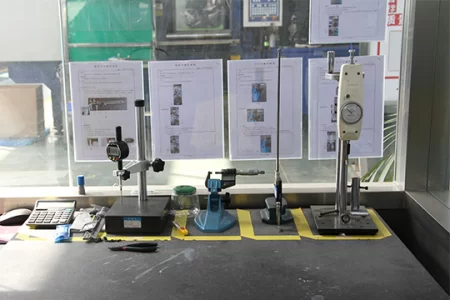
Inspection Methods
Common inspections include:
Ultrasonic testing (UT)
Magnetic particle inspection (MPI)
Tensile testing
Hardness testing
CMM dimensional inspection
Higher inspection standards increase direct cost but reduce failure risk.
Certification Requirements
Compliance with ISO, CE, or other standards requires documentation, traceability, and structured process control.
HULK Metal maintains comprehensive inspection capabilities to ensure consistent quality while minimizing defect-related losses.
Logistics and After-Sales Support
Shipping costs vary based on weight, packaging, and destination.
Export-grade packaging prevents damage during transportation. Inventory management solutions reduce urgent freight expenses.
A reliable after-sales system also protects customers from unexpected losses caused by quality issues.
How to Reduce the Total Cost of Custom Forged Parts
Reducing cost requires a systematic strategy:
Collaborate early on design optimization
Improve material yield through near-net forging
Integrate machining and heat treatment services
Optimize production planning
Choose a supplier with strong engineering and supply chain capability
The goal is not the lowest unit price, but the lowest total cost of ownership.
Why Choose HULK Metal?
Qingdao HULK Metal Technology Co., Ltd. provides:
Integrated raw material sourcing
Advanced forging simulation and die design
200T–1000T forging equipment
Complete quality control systems
In-house machining and finishing
Stable supply chain management
Professional after-sales support
Our procurement, technical, production, QC, logistics, and service teams work together to control cost at every stage.
By combining engineering expertise with efficient manufacturing, we help customers achieve high-performance forged parts at competitive and sustainable pricing.
The cost of custom forged parts is determined by much more than raw material price. Design complexity, tooling strategy, forging method, production efficiency, inspection standards, and supply chain management all play critical roles.
Understanding these factors allows OEM buyers to make informed decisions and avoid hidden costs.
Partnering with an experienced and integrated supplier like HULK Metal ensures that your custom forged components deliver optimal performance, reliability, and long-term value.
If you would like to evaluate the cost structure of your current forged parts, our engineering team is ready to provide professional analysis and optimization suggestions.
Article Navigation
Others You Might Want to Know
Article Navigation
Industries
Foundries
Others Articles About Hot Forging
-

July.01, 2024
Difference between hot forging and cold forging
READ MORE
-
June.27, 2024
What are the advantages and disadvantages of the hot forging process?
READ MORE
-
January.18, 2024
Forging: What Is It? What Are The Different Types of Hot Forging?
READ MORE
-
March.07, 2025
What to look for when looking for a Forging Manufacturer?
READ MORE
-
February.28, 2025
Open Die Forging: Exploring the forging process and the key factors in selecting a OEM
READ MORE
-
February.18, 2025
Factors to consider when purchasing custom forgings
READ MORE
-
February.14, 2025
HULK Metal's hot forging quality control
READ MORE