By sharing knowledge, experience and views in the field of forging technology, we help you understand, learn and apply relevant technologies.

Hulk Metal Forging Technology
Share technical experience
-
Home>
-
Blog>
-
Technology>
Why Hot Forging Delivers Superior Mechanical Properties Compared to Casting and Machining?
10
2025.12

Hot forging is a high-temperature metal forming process in which metal is heated above its recrystallization point and shaped under controlled compressive force. This combination of heat and deformation uniquely enhances the internal microstructure of the material, producing components with significantly superior mechanical properties. Compared with casting and machining, hot forging consistently delivers higher tensile strength, improved toughness, greater fatigue resistance, and enhanced structural integrity. These advantages make forged components the preferred choice for demanding industrial environments.
For industries such as construction, mining, heavy equipment, transportation, trailers, and material handling, performance and reliability are non-negotiable. HULK Metal has accumulated extensive experience in precision hot forging, supplying high-strength forged parts that perform under dynamic loads, high impact, and extreme service conditions. With advanced forging equipment, a complete production chain, and strict quality inspection, HULK Metal provides globally trusted forged components that outperform cast and machined alternatives.
This article examines why hot forging delivers superior mechanical properties, offering a clear comparison with casting and machining to support informed decision-making for engineering and procurement teams.
Understanding Hot Forging: Process and Advantages
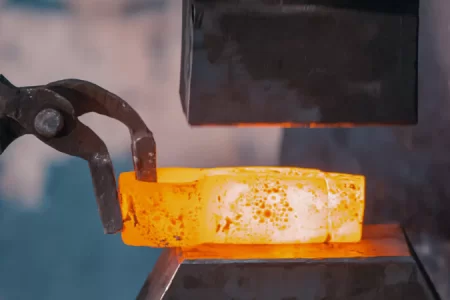
Hot forging involves heating steel or other metals above the recrystallization temperature—typically between 950°C and 1250°C for most steels—allowing atoms to rearrange during deformation. This high-temperature plasticity enables the metal to flow smoothly into the die cavity when pressure is applied through a hammer or hydraulic press.
How the Hot Forging Process Works
Raw Material Preparation:
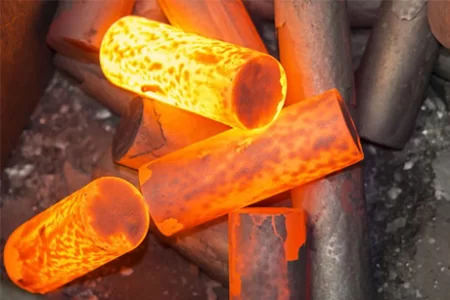
High-quality billets or bars are cut to size and prepared for heating.
Heating:
Parts are heated in induction or gas furnaces to ensure uniform temperature through the entire cross-section.
Forging Deformation:
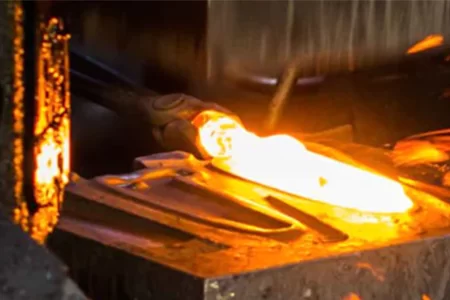
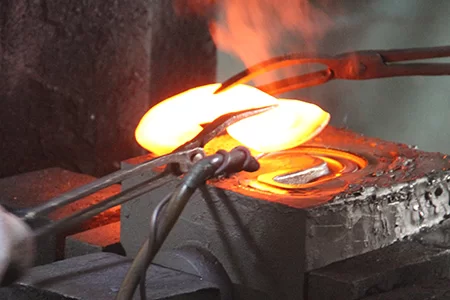
Compressive force is applied using forging hammers or presses, shaping the hot metal into the desired geometry.
Trimming and Secondary Processes:
Flash is removed, and components may undergo additional machining for precise tolerances.
Heat Treatment and Finishing:
Normalizing, quenching, tempering, or other treatments enhance final mechanical performance.
Key Advantages of Hot Forging
Grain Flow Alignment Along Part Geometry
As hot metal deforms under pressure, its internal grain structure elongates and aligns along the contour of the forged shape. This directional grain flow dramatically improves load-bearing capacity, impact toughness, and fatigue resistance.
Elimination of Internal Voids and Porosity
The compressive forces used in forging close internal voids and disrupt porosity, resulting in a superior, dense, defect-free structure. This is in direct contrast to casting, where shrinkage cavities and porosity are common.
Enhanced Density and Structural Integrity
Forged parts maintain a uniform, refined microstructure free from the internal weaknesses often seen in cast components. This structural consistency is essential for components required to withstand shock, vibration, or continuous cyclic loading.
Why These Benefits Matter
For high-stress applications—such as load-bearing joints, lifting hardware, drivetrain components, gears, and structural connectors—mechanical reliability determines service life, safety, and maintenance intervals. Hot forging ensures components can perform consistently in demanding industrial conditions.
Hot Forging vs. Casting: A Mechanical Performance Comparison
Casting involves pouring molten metal into a mold to form a desired shape. Common techniques include sand casting, investment casting, and die casting. While casting is suitable for complex geometries and large production volumes, its mechanical performance is inherently limited by the way metals solidify.
Limitations of Casting
Porosity and Shrinkage Cavities
During solidification, gases become trapped, and shrinkage occurs, leading to internal voids. These defects reduce density and weaken the material, particularly in applications that require fatigue resistance.
Random Grain Structure and Lower Fatigue Strength
Cast metal cools from the outside inward, forming coarse, non-directional grains. These irregular microstructures create weak points that reduce fatigue life, impact strength, and resistance to crack propagation.
Susceptibility to Cracking Under Dynamic Loads
Because of porosity and uneven grain structure, cast components are more likely to crack under sudden impact, vibration, or repeated cycles of stress.
Advantages of Hot Forging Over Casting
Continuous Grain Flow Enhances Fatigue and Impact Performance
Forged components undergo plastic deformation that results in grain flow aligned with the shape of the part. This produces far greater resistance to bending, torsion, and impact loading.
Higher Tensile and Yield Strength
Hot forging typically increases tensile strength by 15–30% and yield strength by 20–40% compared with cast steel, depending on material grade and heat treatment.
Greater Structural Reliability
The elimination of internal casting defects ensures consistent mechanical performance across every section of the part.
Use Case Example: Forged Crankshafts vs. Cast Crankshafts
Forged crankshafts are widely used in diesel engines, construction machinery, mining equipment, and high-performance automotive engines because they must withstand high torsional forces. Cast crankshafts, while cheaper, cannot match the fatigue resistance or toughness required for heavy-duty operation.
Hot Forging vs. Machining from Bar Stock: Structural Integrity Matters
Machining involves removing material from a solid bar or billet through cutting, drilling, milling, or turning. This process is precise, but it does not improve the material’s inherent mechanical properties.
Drawbacks of Machined Parts
Interrupted Grain Flow
Bar stock contains a linear grain structure. When material is removed to form complex shapes, the grain flow is cut, creating weak points where mechanical stress concentrates.
Material Waste
Machining complex shapes can generate 50–70% material waste, significantly increasing cost when using premium alloy steels.
No Improvement in Base Material Properties
Machining does not alter the microstructure, so the finished part retains the same properties as the raw bar, without the benefit of grain refinement or higher density.
Advantages of Hot Forging Over Machining
Near-Net Shape Reduces Machining Requirements
Forging produces shapes close to the finished geometry, minimizing machining time and reducing raw material consumption by up to 30–50%.
Optimized Grain Orientation
Because grain structure is shaped along the contour of the part, forged components exhibit much higher strength and deformation resistance.
Cost Efficiency for High-Volume Production
For repeated large-batch production, forging offers significantly lower per-piece cost compared with extensive machining.
Example: Forged Flanges vs. Machined Flanges
In oil & gas pipelines, forged flanges provide better toughness, crack resistance, and reliability in high-pressure environments. Machined flanges may be adequate for low-pressure service, but they cannot match the structural integrity of fully forged alternatives in critical operations.
Why Choose HULK Metal for Your Hot Forging Needs?
HULK Metal is a full-chain sourcing and manufacturing partner specializing in high-quality custom hot forging for industrial sectors worldwide. With a mature supply chain and advanced technical capability, we provide reliable, scalable production for OEM customers.
Integrated Supply Chain Capabilities
From raw material procurement to precision forging, heat treatment, surface finishing, and final inspection, every step is performed under unified quality standards. This ensures complete traceability and consistent performance.
Advanced Forging Equipment & Quality Control
Hydraulic and mechanical forging presses
High-efficiency heating furnaces
CNC machining centers for tight-tolerance finishing
Non-destructive testing (UT, MT)
Tensile and hardness testing
Dimensional inspection with CMM equipment
Our strict quality control guarantees stable mechanical properties and compliance with international industry standards.
OEM Support
Customers can supply 2D drawings, 3D models, or physical samples. Our engineering team can redesign the part for improved manufacturability, mechanical strength, and cost optimization.
Global Logistics & After-Sales Support
We support worldwide delivery for bulk orders and offer complete after-sales service, including tracking, documentation, and technical support.
Hot forging delivers unmatched mechanical performance due to three key metallurgical advantages:
Refined microstructure created by dynamic recrystallization
Directional grain flow tailored to the part’s geometry
Elimination of defects such as porosity and shrinkage
When compared with casting and machining, hot forging produces stronger, tougher, more reliable components with longer service life and superior resistance to fatigue and impact. For industries where safety and durability are essential, forging is not merely an option—it is the standard.
As a trusted global supplier with comprehensive production capabilities, HULK Metal delivers precision hot-forged parts that meet the highest expectations for quality, performance, and consistency. Partnering with HULK Metal ensures you receive engineered forged solutions built for demanding industrial applications.
Article Navigation
Others You Might Want to Know
Article Navigation
Foundries
Others Articles About Metal Forging
-

July.01, 2024
Difference between hot forging and cold forging
READ MORE
-
June.27, 2024
What are the advantages and disadvantages of the hot forging process?
READ MORE
-
January.18, 2024
Forging: What Is It? What Are The Different Types of Hot Forging?
READ MORE
-
August.14, 2025
How Hot Forging with CNC Machining Improves Durability, Accuracy, and Efficiency?
READ MORE
-
July.16, 2025
How to Choose the Right Forging Service for Your Industrial Project
READ MORE
-
June.19, 2025
Most Common Heat Treatments for Alloy Steel Hot Forging Parts
READ MORE
-
April.30, 2025
A step-by-step guide to ordering forged steel products
READ MORE